



The InsurTech industry is undergoing a major transformation. As risks increase, insurers are rethinking how they deliver their services. The goal is no longer simply to compensate customers after an incident. Insurers are increasingly focusing on anticipating risks and providing ongoing support.
At Novity, we see this shift through our work as a technology and data partner to leading insurance companies. Customer experience, artificial intelligence (AI) and real-time data are becoming essential to making insurance more accessible and proactive.
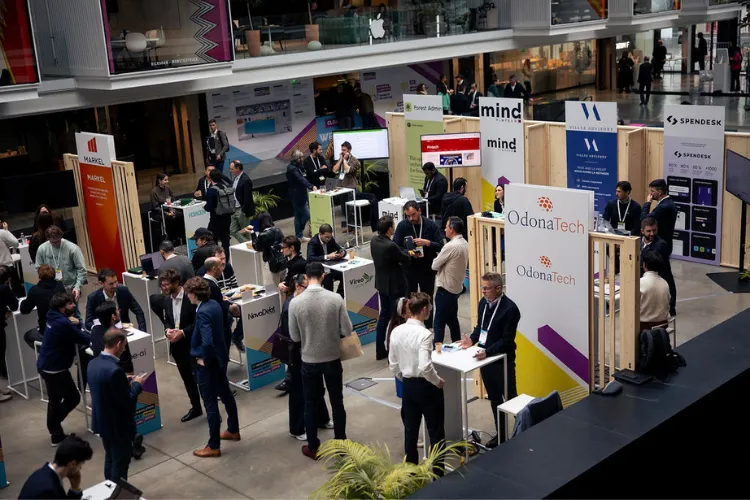
On 14 October 2026, France FinTech, of which Novity is a partner member, organised an event on these challenges at Lesfurets. The event brought together insurers, startups and technology providers to discuss emerging solutions and innovations.
One message stood out: established insurers and newer technology companies are not simply competing. They are helping reshape an industry where technology makes it possible to act before problems occur.
Moving from historical data to real-time data engineering
Insurance has traditionally relied on historical data to assess risk. Pricing models use past statistics to evaluate customer profiles.
Today, insurers are developing systems that can collect and analyse risks as they happen.
Antoine Pougeas, Chief Sales Officer at Novity, attended the event and explained this change:
« L'assurance traditionnelle utilise des critères du passé pour définir un scoring, comme le nombre de sinistres sur les trois dernières années. Aujourd'hui, les modèles paramétriques et préventifs s'appuient sur des critères réels. Que vous ayez eu une conduite sage dans le passé importe peu. Ce qui compte, c'est l'analyse du comportement en direct qui définit le risque. »
This shift requires infrastructure capable of processing large volumes of real-time data.
It also changes the insurer's role. Rather than intervening only after an incident, insurers can become partners in their customers' everyday lives.
Three sectors illustrate this transformation: healthcare, motor insurance and climate risk.
Healthcare: Using gamification and hybrid care to support prevention
In healthcare, the challenge is to keep people engaged over time and help prevent complex medical conditions. InsurTech companies such as Alan are rethinking the customer experience. They combine gamification with hybrid healthcare services, connecting digital tools with physical networks of healthcare professionals.
From a technical perspective, this starts with mobile applications that reward healthy habits. For example, Alan Walk encourages users to walk regularly. Participants earn virtual points, known as berries, which they can exchange for healthcare products or services.
Supporting this feature requires smooth integration with smartphone sensors and native APIs, including step counters. It also requires a real-time virtual wallet to manage rewards. Beyond gamification, the application acts as a central platform for preventive healthcare.
Using behavioural design techniques, such as reminders and personalised suggestions, it encourages healthier habits and improves access to care.
This includes:
- Fully digital services, such as teleconsultations and secure messaging with doctors.
- In-person consultations with healthcare professionals, including opticians and dermatologists, at the workplace.
Delivering this experience requires secure, interoperable cloud architectures. These systems must also meet French health data hosting requirements (HDS) to protect sensitive patient information.
Motor insurance: Telematics and the challenge of edge computing
Motor insurance shows how connected sensors can support more personalised risk assessment. Pay how you drive insurance links premiums to actual driving behaviour.
One example discussed at the event was Direct Assurance's Udrive application. The technical challenge is to collect driving data without creating unnecessary friction for users.
A standalone connected device synchronises with a smartphone through Bluetooth. It uses sensors such as accelerometers, gyroscopes and GPS to monitor driving behaviour. Behind the application, data engineering teams build pipelines that process continuous streams of information.
These include sudden acceleration, emergency braking and cornering speed. The data feeds into a scoring system that adjusts insurance pricing each month. Drivers receive feedback through a clear, accessible interface. This helps them understand risky behaviours and take action to improve road safety and potentially reduce their premiums.
Climate: Parametric insurance and digital twins
As storms, floods and droughts become more frequent, traditional insurance models face growing challenges. Assessing damage can take considerable time, delaying compensation.
One example is soil shrinkage and swelling caused by changes in moisture levels. This can damage building foundations and require extensive structural repairs. To anticipate these risks, insurers are exploring parametric insurance.
Companies such as Descartes Underwriting use this approach to automate payouts when predefined conditions are met. The system relies on smart contracts triggered by external Internet of Things (IoT) data.
Weather stations, seismographs, soil moisture sensors and satellite data can confirm when a critical threshold has been reached, such as a certain level of rainfall or temperature. This approach also requires insurance systems to connect with property technology (PropTech) data.
Building information databases, such as those developed by Beeldi, help insurers understand the technical characteristics of properties. Digital twin solutions, such as those offered by Spinalcom, can model infrastructure and identify vulnerabilities.
By combining these data sources, insurers can map risks across property portfolios. Data engineering then makes it possible to alert property managers and plan preventive work before damage occurs.
How technology is changing insurance
A technology and data partner to accelerate insurance innovation
Building prevention-focused insurance platforms requires specialist engineering skills.
Insurers need to process telematics data, develop responsive mobile applications and deploy machine learning algorithms.
These requirements add complexity to already demanding product roadmaps.
Since 2019, Novity has supported more than 35 InsurTech companies in developing custom digital solutions.
Our hybrid model allows us to build complete engineering teams around our clients' projects. Whether you want to improve customer journeys, meet regulatory requirements, ensure reliable access to data or automate processes with AI, we bring together the right expertise.
Our Data Engineers and Product Engineers work directly alongside your teams. They become part of your organisation and help turn complex technology requirements into reliable software solutions.
Sources
- France Assureurs - Key figures for the French insurance industry in 2025
- Capital - Alan raises €480 million and aims to redefine preventive healthcare
- RMC - Can real-time monitoring of driving behaviour reduce motor insurance costs?
- BFM - Parametric insurance and faster compensation without traditional claims assessment