
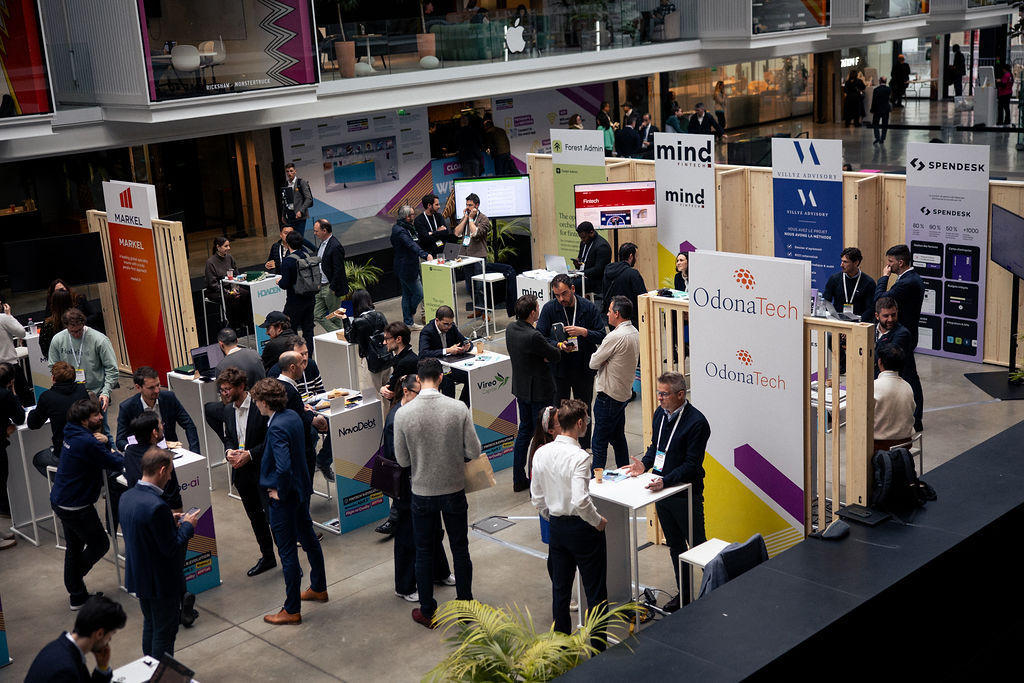




On 1 April 2026, Station F hosted FinTech R:Evolution, bringing together key players from across the industry.
This year's edition marked a turning point for the fintech ecosystem: the era of growth at all costs is giving way to a greater focus on profitability, technical excellence and operational efficiency.
A Fintech industry coming of age
FinTech R 2026 (FFT26) brought together more than 2,000 participants around one clear message: the French fintech industry is entering a new phase of maturity and growth.
From networking sessions to panel discussions on European digital sovereignty, three major themes dominated the conversations:
- Industry consolidation: The sector is reaching a critical scale where mergers are becoming an increasingly important strategy for survival and growth.
- AI industrialisation: Moving beyond prototypes to deploy robust, production-ready AI systems.
- Operational resilience: A stronger emphasis on software delivery quality and regulatory compliance, particularly DORA and the EU AI Act.
“Flight to Quality”: A new direction for fintech, explained by Charlie Perreau and Alain Clot
One of the highlights of the event was the opening plenary session, moderated by Charlie Perreau, Head of Tech-Media-Startup at Les Echos.
The discussion centred on a clear assessment from Alain Clot, President of France FinTech: the industry has reached a “Flight to Quality” turning point.
You can watch his analysis of the fintech sector, shared during the opening keynote of the 11th edition of FinTech R:Evolution #FFT26.
Three key messages emerged from the session:
- From hypergrowth to profitability: The priority is shifting towards sustainable business models capable of generating positive cash flow. The days of uncontrolled cash burn are coming to an end.
- Consolidation and critical scale: To compete with international giants, French fintech companies need to expand their reach across Europe, with strategic mergers playing a key role.
- Excellence as the new standard: Quality is no longer measured solely by the final product. It also depends on the resilience of the organisation, the reliability of its code and the strength of its operations. The industry is entering a period of industrial consolidation.
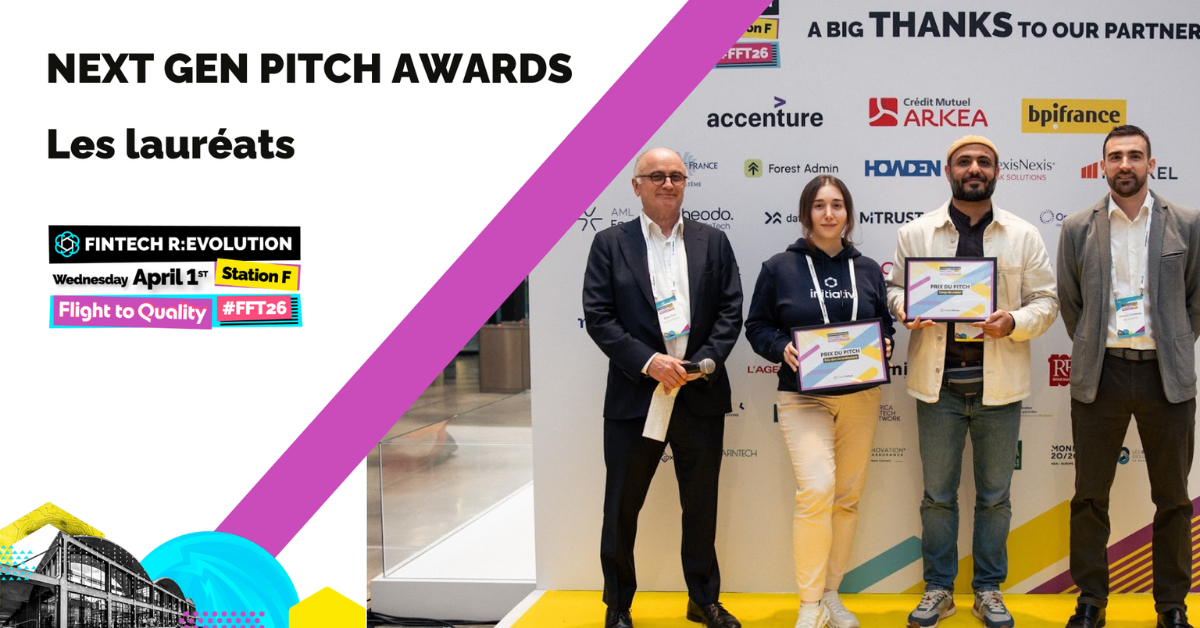
Next Gen Pitch Awards: 300 Seconds to Win Over Leading Investors
Now a highlight of FinTech R, the Next Gen Pitch Awards brought together 26 companies competing in front of a packed audience.
From seed-stage startups to Series A companies, the competition represented a broad range of fintech segments, including insurance, payments, asset management and RegTech.
The 5-Minute pitch challenge
The challenge was demanding: each company had just 300 seconds to present its solution to a jury representing some of the industry's most active investment firms, including BlackFin, Bpifrance, Truffle Capital, Serena, Varsity, Arkéa and Founders Future.
Beyond presentation skills, the projects were assessed against strict criteria:
- Scalability and the strength of the business model.
- The ability to achieve profitability quickly.
- Integration of ESG considerations and the quality of the founding team.
Initiativ and Welcount: Where impact meets performance
This year's awards highlighted two companies in the Banking Services / Neobanks category, demonstrating that innovation can go hand in hand with sustainability and regulatory resilience.
1. Initiativ — Investors' Award
Founded in 2024, Initiativ stood out to the jury with its approach to one of industry's major challenges: decarbonisation.
The startup has developed a digital carbon allowance trading exchange designed exclusively for industrial businesses (B2B).
By combining advanced financial technology with the urgent need to address climate change, Initiativ enables companies to manage their environmental assets with greater transparency and efficiency.
2. Welcount — Intelligent Financial Management
Welcount specialises in intelligent financial management, with a strong focus on operational reliability.
Its solution provides highly automated cash flow and accounting management for SMEs, with evolving regulatory requirements built into the platform.
Its strength lies in combining a thoughtfully designed user interface with a robust back-end infrastructure, ensuring reliable financial data management.
These examples show that the future of fintech will not be shaped by disruptive ideas alone, but by companies capable of turning innovation into reliable, scalable solutions through disciplined execution.
Conclusion: Towards industrial consolidation in Fintech
FinTech R 2026 reinforced a clear message: the strength of a fintech company is no longer measured by the impact of its marketing, but by the resilience of its technology architecture and its ability to deliver.
This year's edition marked the end of one cycle and the beginning of a new era of industrial consolidation.
Across the fintech ecosystem, whether the challenge is meeting DORA requirements, scaling AI systems or stabilising software delivery processes, the priority is now to turn innovation into sustainable, profitable technology assets.
The French fintech industry is moving beyond experimentation. It is preparing to scale.
Sources & Ressources
- France FinTech : Newsletter #280 – Lauréats des Next Gen Pitch Awards FFT26
- Analyse Sectorielle : 10 ans de révolution Fintech – Alain Clot, Président de France FinTech
- Focus Lauréat (Initiativ) : Lancement de la première néo-bourse carbone pour industriels
- Focus Lauréat (Welcount) : Solution d’inclusion et de gestion financière pour les nouveaux arrivants


