


The technology services industry is undergoing a major shift. For years, businesses used external IT providers mainly to increase development capacity and reduce costs.
Today, generative AI and AI agents can handle more routine coding, automated testing and documentation tasks.
This is changing what businesses expect from software engineers. Their value is no longer measured by the number of lines of code they write. What matters is their ability to understand business needs, design secure systems and integrate complex technologies.
As a result, traditional IT outsourcing models are becoming less effective for complex projects.
Why Outsourcing basic development tasks is no longer enough
Businesses continue to invest in software development. Despite predictions about the end of SaaS and custom software, companies still need reliable technology platforms. Many are now upgrading their systems to support AI and data applications.
However, their expectations of external technology partners have changed. Traditional offshore IT providers often supply developers to complete tasks based on fixed specifications.
Today, software companies and digital teams increasingly need engineers who can contribute to product decisions. Managing teams that combine engineers and AI agents also requires clear processes and strong oversight.
Business knowledge, security, compliance and system integration are becoming more valuable than development capacity alone. IT providers that focus mainly on selling development hours face growing pressure.
Those that bring software architecture expertise and understand business needs are becoming more valuable partners.
Integrated Engineering: The Forward Deployed Engineer approach
This shift reflects the growing interest in Forward Deployed Engineers (FDEs). The FDE model emerged in the 2010s through companies such as Palantir. It is now gaining attention as more businesses deploy AI. Unlike a traditional external consultant, an FDE works closely with the client's teams. Their role is to adapt complex technology to real business needs and integrate it into existing systems.
At Novity, this approach is not a response to the latest AI trends. It has been part of our operating model since we founded the company in 2019. Our approach goes beyond traditional offshore outsourcing.
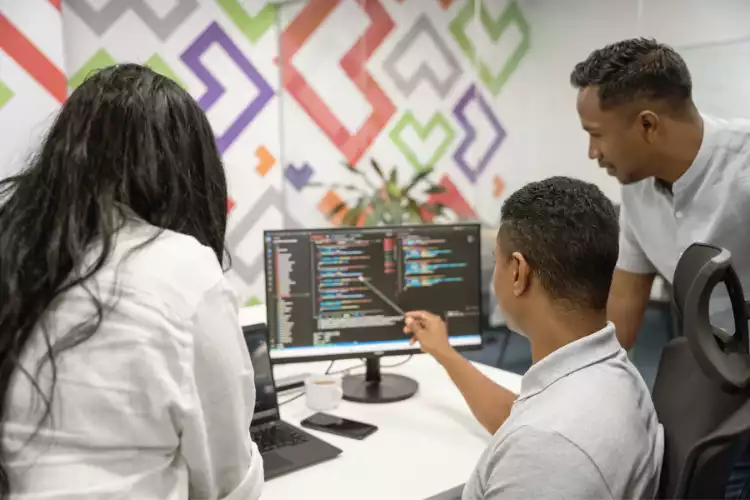
Whether they are Product Engineers, Software Engineers, DevOps specialists, Data Engineers or QA experts, they become part of our clients' technology and product teams. They join agile meetings, use the same communication tools and work towards shared product and business goals. This close collaboration helps teams make better technical decisions and maintain continuity throughout the product lifecycle.
Meeting the priorities of 2026: Security, compliance
and AI
A technology partner must understand the challenges its clients face.
According to Numeum, the French professional association for digital services and software companies, three priorities stand out for engineering projects towards the end of 2026:
- Security: Mentioned in 92% of strategic projects.
- Regulatory compliance: 84%.
- Artificial intelligence deployment: 71%.
Meeting these needs requires more than general software development skills. Integrated engineers and FDEs must keep their technical knowledge up to date. This is why Novity invests in continuous training. More than half of our consultants are already taking part in advanced certification programmes, including Anthropic's Claude Certified Architect – Foundations (CCA-F). Novity also holds Certified status in the Claude Partner Network. These skills help our engineers design secure AI systems, manage context windows and reduce security risks within client environments.
Why commitment matters more than location
Choosing an integrated technology partner is no longer just about reducing costs. Finding experienced engineers is challenging. Businesses need professionals who can work independently, understand product development and communicate clearly in French or English. They also need people who can contribute over the long term.
Our engineers may be based up to 8,000 kilometres from their clients. Yet our working model is designed to make distance less of an obstacle. Our teams work fully remotely but remain closely connected to their clients' internal teams. They take part in daily activities, contribute to decisions and share responsibility for project outcomes.
This approach is reflected in the feedback we receive.
Youssef Boumaiza, Regional Director at kShuttle, a SaaS company specialising in ESG and sustainability, shared the following feedback about one of our consultants:
« The consultant delivers solid, reliable work. They integrate into the team like an internal employee: responsive, transparent and proactive. They bring real value to the project. »
Traditional IT Outsourcing vs Integrated Engineering Teams

About Anthropic's Claude Partner Network
The Claude Partner Network (CPN) is how Anthropic works with the firms that put Claude into production for customers.
The Services Track recognizes partners for building a certified delivery team, delivering Claude use cases for clients, and proving the work through public customer references.
Partners advance through Certified, Select, Preferred, and Global Premier tiers.
Sources
- Maddyness - SaaSpocalypse : pourquoi les entreprises continueront d’acheter leurs logiciels
- IT For Business - L’IA agentique va-t-elle remplacer l'offshore ?
- Le Monde Informatique - Numeum prévoit 3% de croissance du marché numérique en 2026 (focus sécurité, conformité, IA)
- Sortlist - Évaluations et témoignages clients Novity