


My engineering career introduced me to banking systems and international finance early on. Designing infrastructure capable of processing large volumes of transactions requires precision. But I soon realised that technology is only valuable when it helps businesses make better decisions.
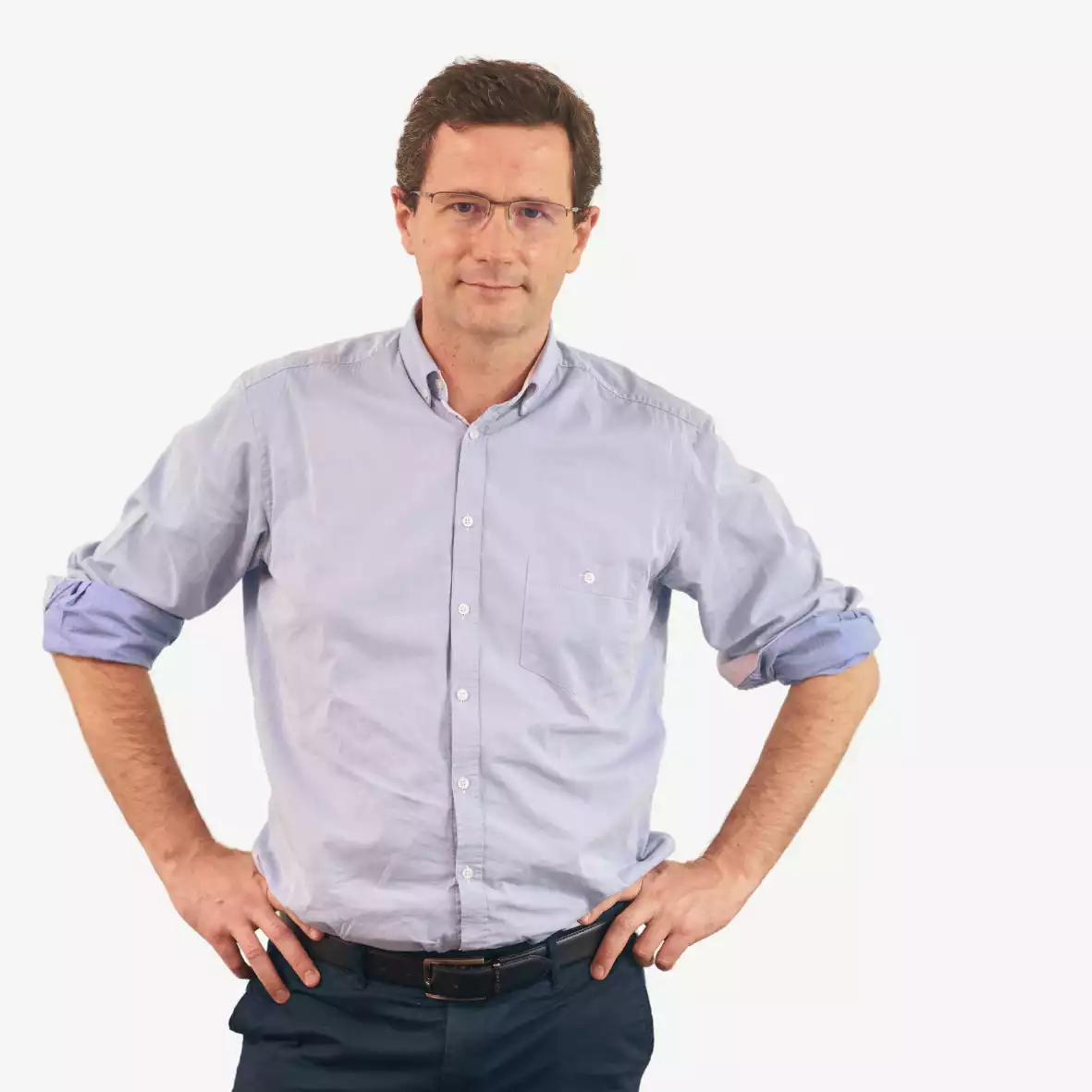
This perspective, combining engineering with practical financial knowledge, shaped my conversation with François Menjaud, CEO and co-founder of Okimia.
François shares my passion for finance and entrepreneurship. His interest in exchanging ideas with other business leaders led him to create Le Nerf de la Guerre, a podcast for CEOs and CFOs. Through the podcast, he explores financial management challenges in clear, practical terms.
This same approach defines his company.
As part of my series highlighting a promising technology company each week, Okimia stands out as an interesting example. It has built a SaaS business in a demanding market by solving a fundamental problem: fragmented financial data in SMEs.
From business needs to software architecture
Okimia's story began in 2019 under its original name, Fygr.
Rather than introducing a completely new concept, the company focused on solving a practical business problem.
Connecting ERP systems to move beyond spreadsheets
For years, startups and SMEs managed cash flow by manually exporting financial data into spreadsheets. This approach had two major weaknesses: a high risk of human error and information that quickly became outdated.
François Menjaud and Geoffrey Laird developed their platform to automate this process.
The software connects directly to bank accounts and widely used business tools. These include ERP systems, accounting platforms and expense management solutions such as Pennylane, Spendesk and Odoo.
Using banking APIs under the EU's Second Payment Services Directive (PSD2) and webhooks from third-party providers, the platform automatically retrieves, cleans and categorises transactions.
This gives business leaders a consolidated, real-time view of their cash position without the ongoing work of maintaining spreadsheets.
Growing without major fundraising rounds
In B2B fintech, companies often raise tens of millions of euros early on to build large teams. Okimia's founders chose a different approach.
Over five years, they raised approximately €2 million, prioritising product development and organic customer acquisition. Rather than building a large sales department immediately, the founders sold the product themselves.
Their direct understanding of customer needs helped them develop software and a product roadmap closely aligned with market expectations.
Once the platform had proved its value and gained significant traction, the company expanded. Today, Okimia has approximately 25 employees and supports more than 3,000 customers across Europe.
From cash flow forecasting to financial operations
In 2026, the company changed its name from Fygr to Okimia.
The rebrand reflected a broader ambition: supporting larger organisations and expanding the platform beyond traditional cash flow forecasting.
From Fygr to Okimia: A broader financial platform
The change was more than a new name.
Okimia redesigned its platform to become a central hub for financial operations, built around three functions:
- Manage: Monitor cash flow, create forecasts and compare budgets with actual results.
- Pay: Make SEPA transfers and issue physical or virtual corporate payment cards.
- Invest: Put surplus cash to work directly through the platform.
The platform still allows finance teams to create forecasts and analyse differences between planned and actual spending.
However, its main development is the ability to act directly on financial information.
Businesses can now make SEPA payments and issue corporate cards without leaving the interface. Each transaction immediately updates the cash flow forecast. A newer feature also allows companies to invest surplus cash directly through the platform.
Making cash flow management more proactive
Okimia operates in the same market as established providers such as Agicap. However, it aims to stand out through ease of use, a simple interface and transparent pricing.
Its approach reminds me of Forscale, another software company working in financial management.
Both help business leaders and CFOs modernise financial processes, but they address different needs. Forscale focuses on financial reporting and profitability analysis. Okimia concentrates on operational cash flow management. Rather than simply reviewing financial indicators, finance teams can use Okimia to take action and manage their transactions directly.
Financial SaaS in the age of artificial intelligence
Artificial intelligence is becoming an important part of B2B software development. During our conversation, François shared his perspective on how AI will change financial management.
Using automation to support better decisions
AI will not necessarily replace traditional SaaS platforms. Instead, it is changing how people use them. According to François, AI will significantly change the role of finance teams.
Tomorrow's CFO will spend less time producing reports, cleaning data and comparing figures. Their role will increasingly focus on making strategic decisions based on scenarios that AI has already generated and analysed.
AI can already improve expense categorisation and help predict cash flow patterns by analysing large transaction histories. Financial software is gradually moving from reporting what has happened to anticipating what may happen next.
Securing financial data before integrating AI
Reliable predictions depend on reliable data. AI can only produce useful financial analysis when the underlying information is properly structured and protected.
For fintech software providers, the challenge is to introduce AI capabilities without compromising data sovereignty. Okimia addresses this requirement through European data hosting that complies with the General Data Protection Regulation (GDPR).
Integrating large language models (LLMs) into business software also requires specialist architectural expertise. At Novity, more than 15 experts have achieved Anthropic's Claude Certified Architect – Foundations (CCA-F) certification. We are also a member of the Claude Partner Network.
These capabilities support our work in designing and deploying secure AI infrastructure.
For software companies looking to modernise their platforms, working with a technology partner experienced in custom SaaS development and AI integration can help accelerate product development while reducing security risks.
Okimia's journey shows that a B2B software company does not need to raise vast amounts of capital to establish itself in a competitive market. By combining a strong understanding of financial processes with disciplined software engineering, the company helps business leaders regain control over one of their most important resources: cash flow.
COMPANY PROFILE
→ Name : Okimia
→ Leadership : François Menjaud (Co-founder & CEO) et Geoffrey Laird (Co-founder & CTO).
→ Industry: Software development / SaaS / financial services/ cash flow management
→ Why Okimia Stands Out : Okimia combines practical technology with measured growth. Rather than prioritising large fundraising rounds, the company focused on profitability and customer needs. Its platform makes financial operations easier to manage and helps businesses take a more proactive approach to cash flow.
Sources
- Findfi - François Menjaud, CEO of Okimia, discusses AI in cash flow management and supporting 3,000 SMEs
- Finyear - Fygr becomes Okimia and launches an integrated payment module
- Nexco - An accountant's review of the cash flow management software now known as Okimia
- Podcast Mind The Gap - How to build SaaS software that can withstand AI disruption